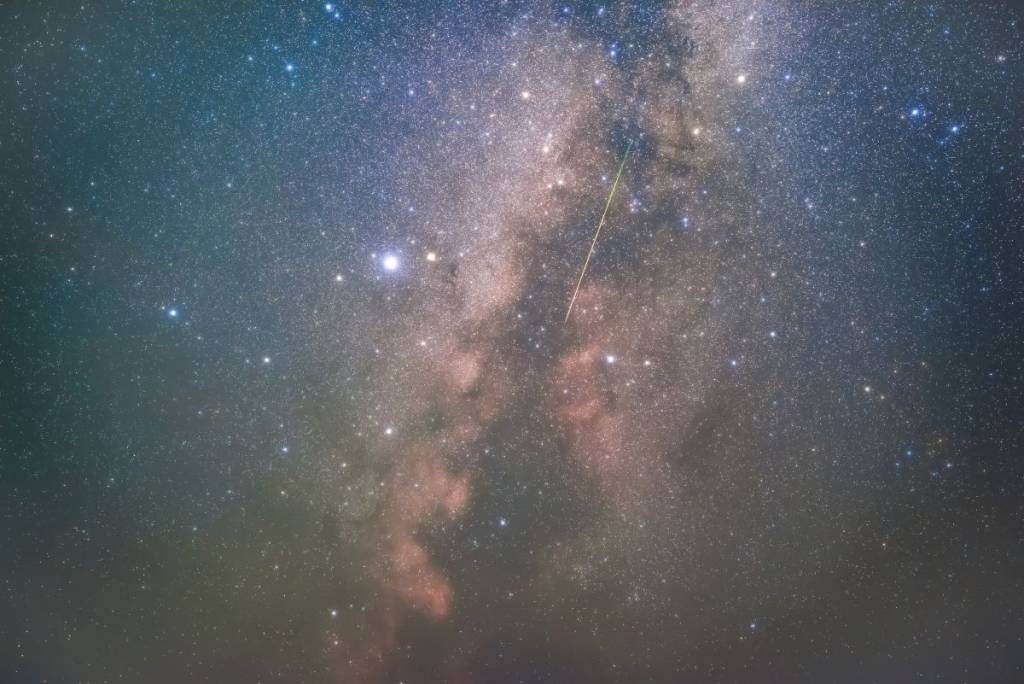

On the night of Wednesday, August 12, to Thursday, August 13, 2026, if the sky is clear and light pollution is low (let’s set a reminder right now: turn off the lights), we’ll be able to see 50 shooting stars per hour streak across the Montreal sky.
Just like every summer, it’s the Perseid meteor shower (even though we prefer to call them “shooting stars”)—the most easily visible and the most magical. It’s almost impossible to photograph; you absolutely must make a wish on every shooting star; it’s a touch of magic and the cosmos in the warm, short nights of a Montreal summer.
So, how will we be able to see the shooting stars in the Montreal sky between August 11 and 13, 2026?
The Perseids
Every summer, Earth crosses the orbit of CometSwift-Tuttle’stail, and as a result, some of the meteors in that tail enter Earth’s atmosphere and burn up—and the spectacle of these “shooting stars” is quite exceptional. They say that for every shooting star, you can make a wish…
This “meteor shower” is the brightest and easiest to observe with the naked eye in mid-August in Quebec. This year, in Montreal, visibility will peak on the night of August 12–13, 2026.
Plus, on August 12, there will be a new moon—just a tiny crescent that won’t light up the sky too much. The darker the sky, the better it is for viewing the Perseids.
If you look closely, you can tell the meteors apart by their color (which reveals the rock’s composition as it burns up).
- red:oxygen and nitrogen
- golden-yellow:iron
- purple:calcium
- orange:sodium
- turquoise-blue:magnesium
Where can you go to see the Perseids in Montreal?
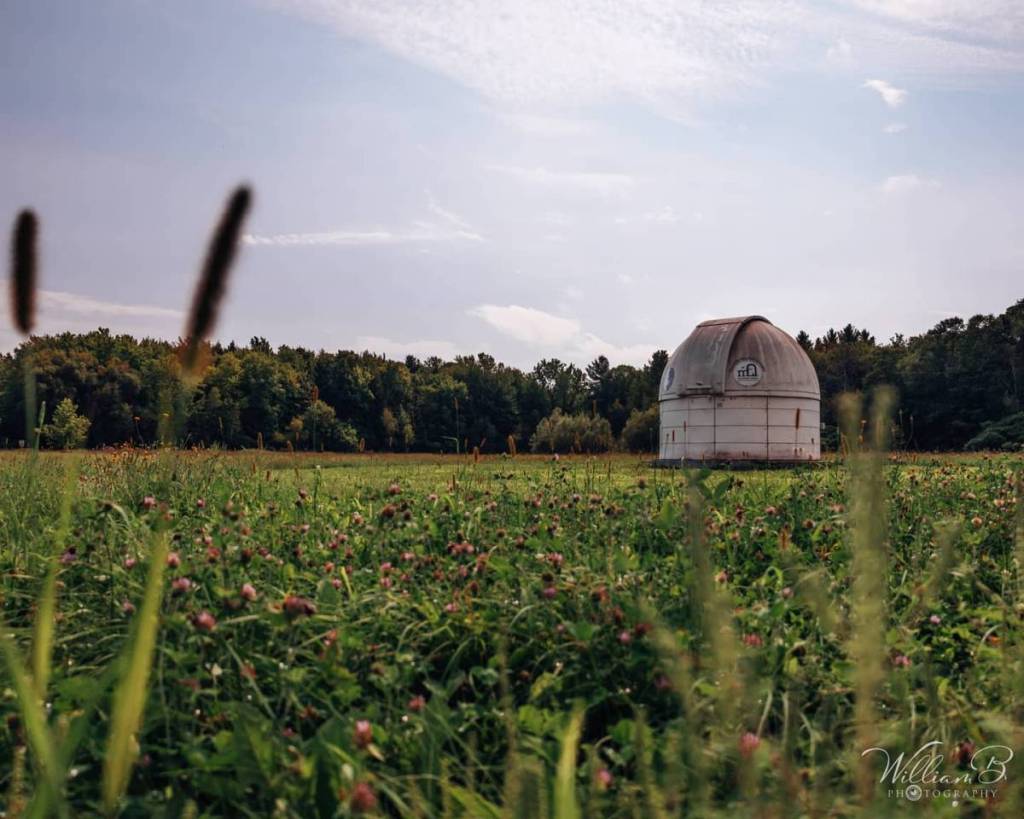
At the Bellevue Observatory
The Montreal chapter of the Royal Astronomical Society of Canada (RASC) organizes an event every year so that Montrealers can lie down in the grass (on a small blanket, with Twizzlers or soft ham sandwiches) and watch the shooting stars fall.
It’s at the Bellevue Observatory, in McGill University’s Morgan Arboretum. This is where the sky is darkest—the spot in Montreal best shielded from city lights.
When? Onthe night of August 12–13, 2026
Where?BellevueObservatory– Morgan Arboretum, 150 Chemin des Pins, Ste-Anne-de-Bellevue
How? Anhour and a halffromdowntown, via the Orange Line and the 419 bus (stop: Sainte-Marie/des Pins)
At the Planetarium
The Space for Life Planetarium organizes an event every year to view the shooting stars, and this year it’s one of their TELESCOPE MEETUPS.
Where? Atthe Planetarium, 4801 Pierre de Coubertin Avenue
When? Onthe night of August 12–13, from 9 p.m. to midnight
What? It’s free, about 45 minutes from downtown, at the Viau station on the Green Line of the metro.
At the Belvédère Outremont
The lookout is open from 6 a.m. to midnight every day, and you can head there (with your cooler) when the sun sets (around 8:20 p.m.) and wait patiently for the moon to rise and the sky to darken.
The lookout offers a perfect view of Mount Royal—a patch of sky not too affected by the city lights—and of the constellation Perseus (where the Perseids fall).
Where? BelvédèreOutremont, at 1J4 Chemin de Polytechnique
When? Onthe night of August 12–13 (but also the few nights before and after—be sure to check the weather forecast to go when the sky is clear).
Where? About50 minutes from downtown, at the Édouard-Monpetit station on the blue metro line
A visit to the Mont-Mégantic Observatory?
For stargazers or those who have the week off, the best place to see the Perseids in Quebec is at the top of Mont-Mégantic—at the Observatory.
It’s the fourth-largest observatory in the country, but it’s the best-equipped (with a 1.6-meter telescope) and the most advanced in Canada.
To get there, you have to hike up the mountain, so be sure to bring good shoes and sunscreen! Mont Mégantic is a national park managed by SEPAQ.
The Observatory is located in the heart of the Mont Mégantic International Dark Sky Reserve, which ensures that light pollution cannot reach this corner of the sky, allowing us to observe the stars under the best possible conditions.
The Observatory is organizing special Perseid nights featuring a show, stargazing, and a night hike…
Where? AtMont-Mégantic, a three-hour drive from Montreal
When?August11–14, 2026