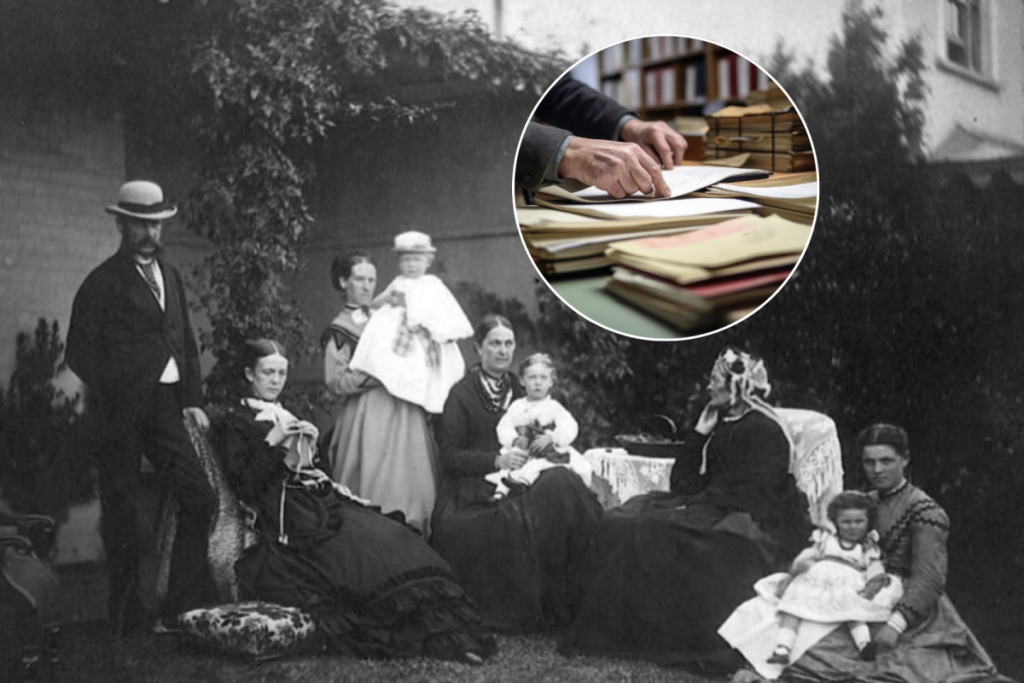

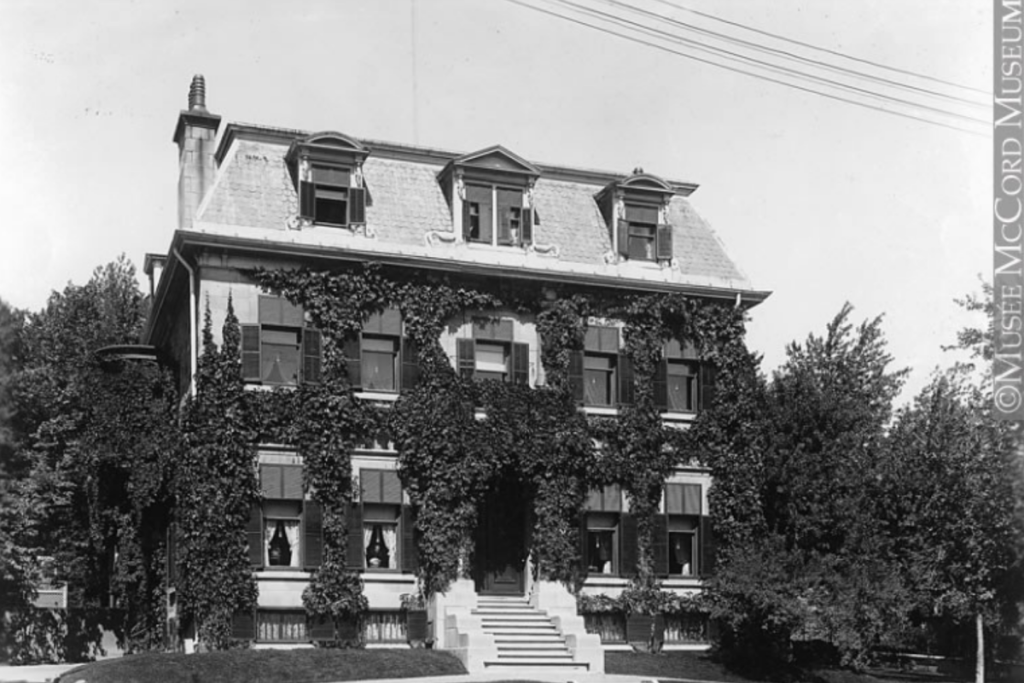
The case made the front page of The New York Times in June 1901, shocking the continent’s financial elite: the wealthy widow Ada Mills Redpath, 59, and her son Jocelyn Clifford Redpath, 24, were found fatally shot in the family mansion in Montreal’s Golden Square Mile.
More than a century later, this tragedy that unfolded at 1065 Sherbrooke Street retains all its intrigue. Amid a colossal fortune, chronic illness, and orchestrated institutional silence, the Redpath mystery remains one of the most fascinating cold cases in Canadian criminal history . The case is all the more captivating now that it is open to the public, who are invited to examine the raw evidence and conduct their own investigation.
This fascination with crime scene investigation and analysis resonates in Montreal, where a new exhibition takes the investigation a step further by inviting visitors to scrutinize clues and interpret them through the lens of experts who bring them to life. Detectives at heart can already secure their access to this life-size crime scene by taking advantage of the Early Bird presale rate currently available.
A wealthy widow and a devoted son
With an estate valued at nearly 180,000 dollars at the time (equivalent to about 5 million dollars today), Ada Redpath was a woman who had managed her own assets since her marriage in 1867. Plagued byintense physical suffering and persistent melancholy, and suffering from eye ulcers and jaw neuralgia, she lived as a recluse in her room, rarely leaving her bed.
Her son Clifford was described by those close to him as a caring young man who read to her and accompanied her on her health retreats in New York State. In June 1901, immersed in intensive study, he was preparing to take the bar exam. Yet, on the evening of June 13, this model son and his mother were found lying in a pool of their own blood.
An official version tailored to fit the narrative
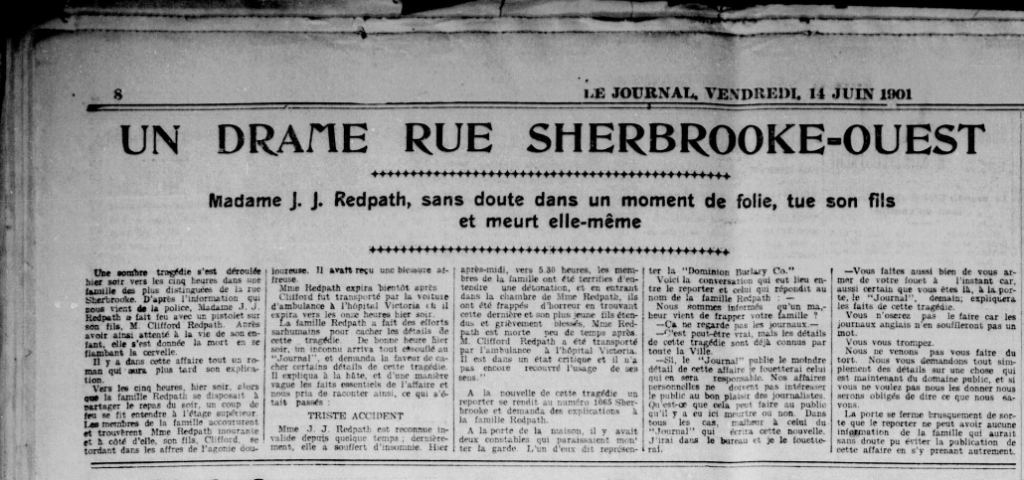
Acting as swiftly as they were suspiciously, the authorities closed the case in less than 48 hours, without even calling the police to the scene. Two days after the tragedy, Ada and Clifford Redpath had already been laid to rest in the family tomb at Mount Royal Cemetery.
To cover up the scandal, the official account put forward by the family physician, Dr. Roddick, claimed that Clifford, under pressure from his bar exam scheduled a few days later, had suffered a sudden epileptic seizure —a condition then closely associated with madness.
Media theories, a dubious medical alibi, and blank records
However, the press quickly turned this narrative on its head by proposing an entirely different theory: it was the mother who killed her son. In a fit of madness caused by her suffering, Ada allegedly opened fire on Clifford as he tried to stop her from taking her own life, before turning the gun on herself.
Contradictions immediately began to pile up. Dr. Roddick’s key testimony wavered: the family physician claimed to have examined the victims at the scene of the tragedy, even though he reportedly did not return to Montreal until the following day.
Similarly, while several newspapers report that the young man was rushed tothe Royal Victoria Hospital before succumbing to his injuries, the hospital’s records contain absolutely no trace of his stay.
Even more troubling is that, while such a tragedy inevitably points to a murder followed by a suicide, Montreal’s official suicide registry for June 1901 lists a clear figure: zero.
The Digital Archive and the Challenge Facing the Four Experts
Today, this true cold case can be explored online. Under the direction of Professors Annmarie Adams and David Theodore ofMcGill University’s School of Architecture, a team of researchers has set out to reconstruct the case using the few surviving historical records.
By combing through the collections of the McCord Museum, the McGill University Archives, the Bibliothèque et Archives nationales du Québec (BAnQ),the Royal Victoria Hospital, and private collections, the team unearthed several hundred original documents. As part of the “Great Unsolved Mysteries of Canadian History” project, this digital archive brings together photographs, newspaper articles, personal correspondence, reports, and records from the period.
To guide the audience, four experts have shared their theories: forensic psychiatrist Renée Fugère, historian Rod MacLeod, researcher Peter McNally, and heiress Amy Linda Redpath, who contributes her previously unpublished family archives.
However, these conclusions are not handed to visitors on a silver platter. To preserve the investigative process, access to the experts’ theories is deliberately restricted: each visitor must first examine the evidence, track down inconsistencies, and form their own verdict before comparing their perspective with that of the historians.